

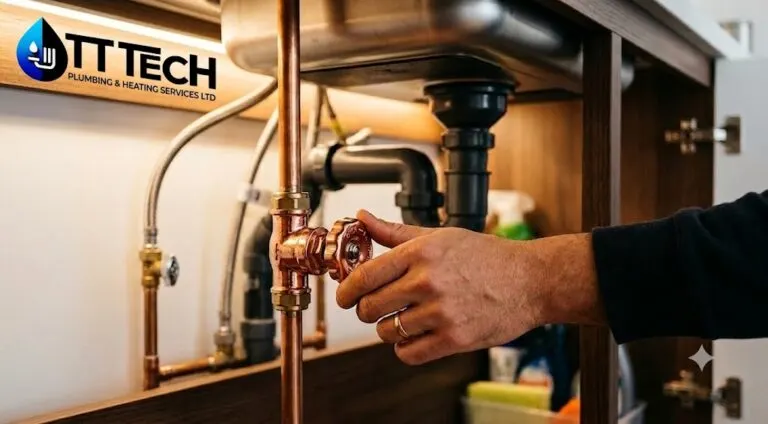
Knowing how to turn off your stopcock can be extremely useful during a plumbing emergency. Whether you have a burst pipe, leaking tap, damaged appliance connection or sudden water leak, shutting off the mains water supply quickly can help reduce water damage to your Sheffield home.
Your stopcock, also known as a stop tap, controls the mains water supply entering your property. In this guide, we explain where to find your stopcock, how to turn it off, what to do if it is stuck and when to call a plumber in Sheffield.
What Is a Stopcock and Why Is It Important?
A stopcock is a valve that controls the incoming mains water supply to your property. Closing it stops or significantly reduces the flow of water into your home.
Knowing where your stopcock is and how to use it is an important part of being prepared for a plumbing emergency.
A working stopcock can help you quickly respond to:
The quicker you can shut off the water, the more effectively you may be able to limit water damage.
Where Is the Stopcock in My Sheffield Home?
The location of a stopcock varies between properties. In many homes, it is located underneath the kitchen sink, but this is not always the case.
You may also find your stopcock in a utility room, downstairs toilet, under the stairs, inside a cupboard or close to where the mains water pipe enters your property.
If you have recently moved home, it is worth finding your stopcock before a plumbing emergency occurs.
Check Under the Kitchen Sink
The first place to check is usually the cupboard underneath the kitchen sink.
Look for a valve attached to the incoming cold-water pipe. Traditional stopcocks usually have a small handle that can be turned by hand.
Check Other Common Locations
If you cannot find the stopcock under your kitchen sink, check:
Older properties in Sheffield may have less obvious plumbing layouts, particularly where the property has been extended or renovated.
How to Turn Off Your Stopcock
Learning how to turn off a stopcock is relatively simple when the valve is accessible and working correctly.
For a traditional stopcock, turn the handle clockwise, or to the right, until it stops. Do not force the valve.
If your property uses a lever-style isolation valve, the lever is generally moved so that it sits across the pipe to shut off the water.
Turn the Stopcock Slowly
Do not use excessive force when operating your stopcock.
A valve that is old, stiff or corroded can potentially become damaged if it is forced. Turn it carefully until the water supply has been isolated.
Check That the Water Has Stopped
After closing the stopcock, open a cold tap.
Some water may remain in the pipework, so the tap may continue running briefly. The flow should gradually reduce and stop.
If water continues flowing strongly, the valve may not be fully closed or there may be another issue with the plumbing system.
What Should I Do After Turning Off the Stopcock?
Once you have turned off the mains water supply, deal with the immediate problem as safely as possible.
If there is a leak, move furniture, belongings and other valuables away from the affected area where practical.
If water has reached electrical equipment, do not touch electrical appliances or wiring while standing in water. Take appropriate precautions and seek professional help.
Drain Remaining Water From the Pipes
Opening a cold tap can help release pressure and drain some of the water remaining in the plumbing system.
This can reduce the amount of water escaping from a damaged pipe or fitting.
Keep the Water Turned Off
If there is an active leak, avoid turning the mains water supply back on until the problem has been repaired or you are confident that it is safe to do so.
Restoring water pressure can cause a damaged pipe or fitting to leak again.
What If My Stopcock Is Stuck?
A stuck stopcock is a common plumbing problem, particularly in older properties.
A stopcock can become stiff due to age, corrosion, mineral deposits or simply because it has not been operated for many years.
Do Not Force a Stuck Stopcock
If your stopcock is difficult to turn, do not use excessive force or unsuitable tools.
Trying to force a seized valve could damage the stopcock or the surrounding pipework and potentially create a larger plumbing problem.
Try Gentle Movement
If the valve is only slightly stiff, carefully try moving it a small amount.
Do not continue applying pressure if it does not move normally.
If the stopcock remains stuck, a professional plumber in Sheffield can inspect the valve and determine whether it needs servicing, freeing or replacement.
What If I Cannot Find My Stopcock?
If you cannot find your internal stopcock, check all of the common locations around your property.
Look beneath sinks, inside cupboards, near utility areas and close to where the incoming water pipe enters the building.
The exact location can vary considerably depending on the age and layout of the property.
Stopcock Locations in Older Sheffield Properties
Many older Sheffield homes have plumbing systems that have been modified over time.
Extensions, kitchen renovations and previous plumbing work can mean that the stopcock is located somewhere less obvious than expected.
If you have an active water leak and cannot find the stopcock, contact a local Sheffield plumber for assistance.
Can a Stopcock Leak?
Yes, a stopcock itself can develop a leak.
You may notice water or dampness around the valve, particularly around the spindle or connected pipework.
An apparently small leak should not be ignored because it may indicate that the valve or surrounding plumbing needs attention.
Common Signs of a Faulty Stopcock
Look for:
- Water around the stopcock
- Persistent dripping
- Corrosion
- A stiff handle
- A handle that will not turn
- A valve that will not fully close
- Water continuing to flow after the valve is closed
- Dampness around nearby pipe connections
A qualified plumber can inspect the valve and recommend the appropriate repair or replacement.
How to Turn Your Stopcock Back On
Once the plumbing problem has been repaired, you can normally restore the water supply by opening the stopcock again.
For a traditional stopcock, turn the handle anticlockwise, or to the left.
Open the valve gradually rather than turning it fully on suddenly.
Check the Plumbing for Leaks
As the water pressure returns, carefully inspect the area where the original problem occurred.
Check around:
- Pipe joints
- Taps
- Toilets
- Washing machines
- Dishwashers
- Boilers and water systems
- The repaired section of pipework
If you notice another leak, turn off the stopcock and contact a professional plumber.
When Should I Call a Plumber in Sheffield?
You should contact a plumber in Sheffield when you cannot safely isolate the water supply or the plumbing problem requires professional repair.
Professional help is particularly important when you are dealing with a major leak, burst pipe or faulty isolation valve.
Call a Sheffield Plumber If:
- Your stopcock will not turn
- Your stopcock is leaking
- You cannot locate the stopcock
- Water continues flowing after the valve is closed
- A pipe has burst
- You have a serious water leak
- Your plumbing needs urgent repair
- You need a stopcock replaced
- You are unsure which valve controls the mains water supply
Attempting to repair complex plumbing problems yourself can sometimes make the situation worse. A qualified plumber can diagnose the problem and carry out the necessary repair safely.
What to Do During a Plumbing Emergency
Knowing how to turn off your stopcock during a plumbing emergency can help you respond quickly.
If a pipe suddenly bursts or water begins escaping rapidly, shut off the mains water supply if you can do so safely.
Then try to protect your belongings from further water damage and arrange professional plumbing assistance.
If the leak is close to electrical equipment, avoid contact with the affected area and take appropriate safety precautions.
Act Quickly to Limit Water Damage:
The longer water continues flowing, the greater the potential for damage to floors, walls, ceilings, cupboards and personal belongings.
Locating your stopcock in advance means you can react much faster when a plumbing problem occurs.
Why You Should Know Where Your Stopcock Is
A plumbing emergency is not the best time to start searching for your stopcock.
Taking a few minutes to locate it now can save valuable time later.
It is also worth checking occasionally that the valve is accessible and can be operated without excessive force.
Knowing where your stopcock is in your Sheffield home gives you an important first step when dealing with an unexpected leak.
Conclusion
Knowing how to turn off your stopcock is a simple but important skill for every homeowner.
Your stopcock allows you to control the mains water supply entering your property and can help reduce water damage during leaks, burst pipes and other plumbing emergencies.
Make sure you know where your stopcock is located, how to turn it off and what to do if it becomes stuck. If the stopcock is faulty, leaking or impossible to operate, or you are dealing with a serious plumbing emergency, contact a professional plumber in Sheffield for help.