

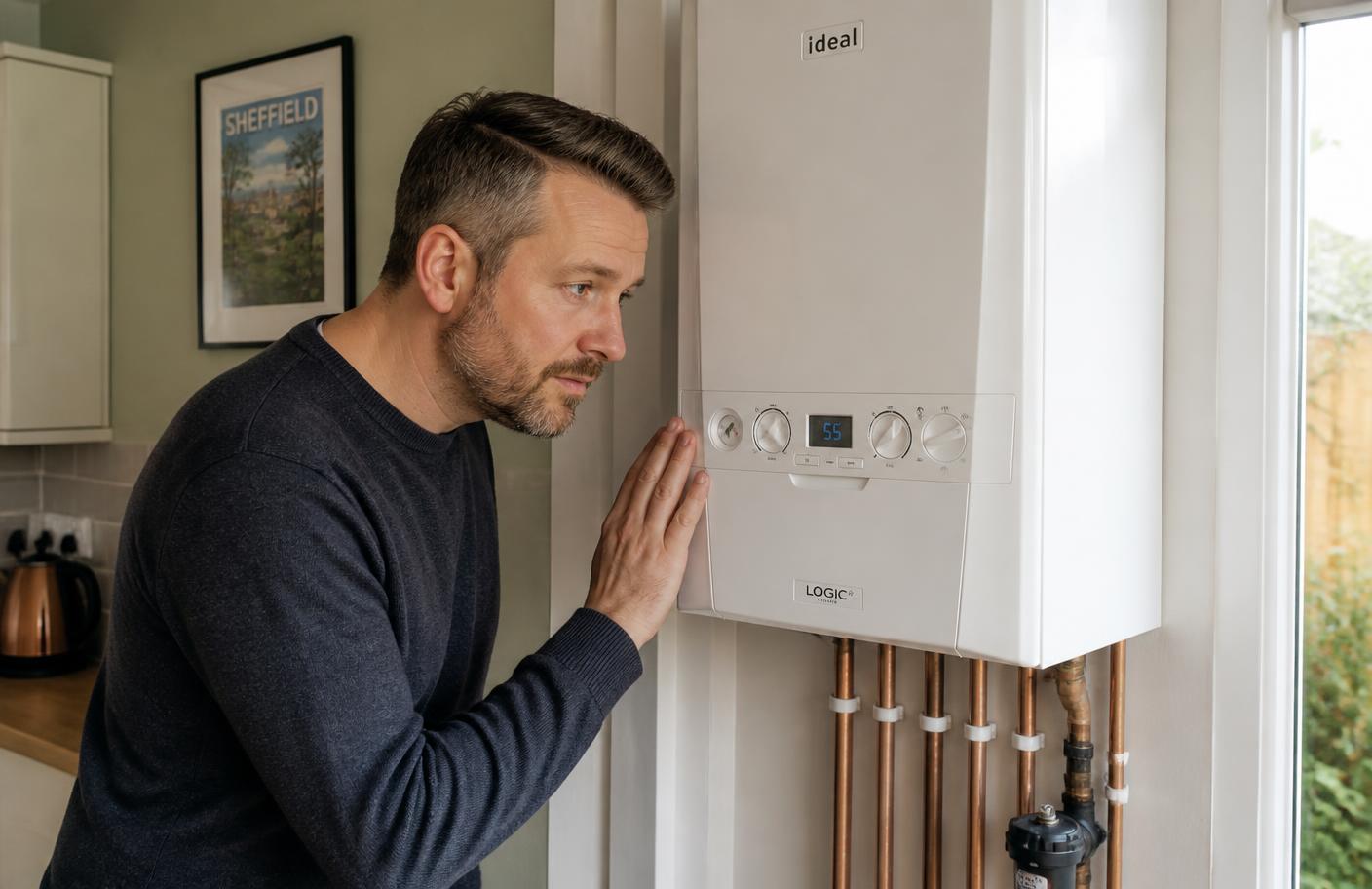
Your boiler started making a noise. Maybe it happened last night. Maybe it’s been going on for weeks, and you’ve been ignoring it. Either way, you’re now at the point where you want to actually know what’s going on, and whether it’s something serious or something you can sort out yourself.
If you’ve got a boiler making strange noises in Sheffield, you’re not alone. The city has a lot of older housing stock, and with it, a lot of aging boiler systems that start to speak up over time. Some of those sounds are nothing to worry about. Others are telling you something needs attention sooner rather than later.
This guide covers each noise type, including banging, whistling, gurgling, humming, and a few others, and provides clear explanations of what it typically means, its causes, and recommended next steps.
What Could Be Causing Your Boiler to Make Strange Noises in Sheffield?
Boilers don’t just start making sounds randomly. There’s always a reason. Sometimes it’s a simple fix. Sometimes it’s a sign of a developing problem. And occasionally, it’s a sign that something has already gone wrong.
The key is understanding what different sounds actually mean, because “my boiler’s making a weird noise” covers an enormous range of situations. A faint hum at startup is completely normal. A loud banging in the middle of the night is not.
Sheffield’s water is moderately hard, especially in certain areas. That matters because limescale builds up inside the heat exchanger over time, and that’s one of the most common culprits behind boiler noise. We’ll come back to that.
Banging or Clunking Noises
What it sounds like
A dull thud, a sharp knock, or a repeated banging sound. Sometimes it happens when the boiler fires up. Sometimes during heating. Sometimes it’s random.
What’s usually causing it
Limescale on the heat exchanger. This is the most common cause of banging in boilers, particularly in areas with moderately hard water. When limescale builds up on the heat exchanger, the part that transfers heat to the water, it creates hot spots. Water near those hot spots can briefly boil and flash to steam before the rest of the system cools it back down. That rapid change is what causes the banging or rumbling sound. Engineers sometimes call this “kettling,” and once you know that term, you’ll recognise it immediately if your engineer ever uses it.
A faulty or failing pump. The circulating pump pushes heated water around your system. When it starts to wear out or seize slightly, it can make thudding or knocking sounds as it struggles to move water properly.
Trapped air. Air pockets in the system can cause banging, particularly near radiators. This is more likely after system work, a refill, or at the start of a new heating season.
Loose pipe brackets. As pipes heat up and expand, they move. If a pipe bracket is loose or missing, that pipe can knock against a wall or joist when the heating kicks in. This often gets mistaken for a boiler fault when the boiler itself is perfectly fine.
What to do
If you suspect limescale, you’ll want a Gas Safe registered engineer to carry out a chemical flush or a powerflush. This cleans out the system and restores proper flow. It’s not something you can DIY, and putting it off tends to make things worse.
If the banging only happens at radiators or pipes, check first whether your radiators need bleeding. If bleeding doesn’t help, the pump may need inspection.
Whistling Noises
What it sounds like
A high-pitched whistle, almost like a kettle. It might be faint, or it might be quite loud. Some people describe it as a screech.
What’s usually causing it
There are a couple of common reasons this happens.
The heat exchanger again: Kettling doesn’t always sound like a bang. Sometimes it produces a high-pitched whistle as steam tries to escape through a gap or as water is forced past a restricted area. If you’re hearing a whistle alongside a lot of heat coming from the boiler body itself, that’s a strong sign.
Low water pressure: When the pressure in your boiler drops below the minimum threshold, usually around 1 bar, the system can start making unusual sounds, including whistling. The first thing to do is check the pressure gauge. A cold boiler normally shows a pressure reading of around 1 to 1.5 bar. Below 1 bar is too low.
A faulty pump or valve: If the pump is struggling to push water through the system or a valve isn’t opening fully, you can get whistling sounds as water is forced through a restricted space. This applies to the pressure relief valve as well.
What to do
Check the pressure gauge first. If it’s below 1 bar, you may be able to repressurise the boiler yourself using the filling loop. Your boiler manual will walk you through this. If you’re not sure, call a local Sheffield heating engineer rather than guessing.
If the pressure is fine, the whistling likely needs a professional to diagnose. Don’t ignore a persistent whistle, particularly if it’s getting louder over time.
Gurgling Noises
What it sounds like
A bubbling, churning, or liquid movement sound. You might hear it in the pipes, at the radiators, or from the boiler itself. It often sounds like someone running water through the system.
What’s usually causing it
Trapped air in the system: This is far and away the most common cause of gurgling. Air gets into the system and sits in the higher points, usually in radiators. When the heating runs, water tries to move past that air, creating the familiar bubbling sound.
Low system pressure: When pressure drops, the water level effectively drops too, which means air can get into places it shouldn’t. If you’re hearing gurgling alongside cold spots on radiators or a pressure gauge that reads low, these two issues are probably connected.
Condensate pipe problems: Worcester Bosch, Vaillant, Ideal, and most modern condensing boilers all have a condensate pipe that drains acidic water out of the system, usually outside or into a drain. In Sheffield winters, this pipe can freeze. When it does, the condensate backs up, and the boiler can make gurgling or bubbling sounds as a result. The boiler may also fault and lock out.
What to do
Start by bleeding your radiators. This is something most homeowners can do themselves. You’ll need a radiator bleed key, a cloth, and about ten minutes. Start with the radiators upstairs or at the end of the system and work your way back. Let the air escape until water starts to trickle out, then close the valve.
After bleeding, check the pressure and top it up if needed.
If you suspect a frozen condensate pipe, you can carefully pour warm (not boiling) water over the external section of the pipe to thaw it. Once the blockage clears, the boiler should reset. If it keeps happening, insulating the pipe will prevent the problem from recurring.
Humming Noises
What it sounds like
A low, steady hum. Sometimes barely noticeable. Sometimes loud enough to hear in adjacent rooms.
What’s usually causing it
The pump is running at too high a speed. This is actually very common and often easy to fix. Most modern circulating pumps have adjustable speed settings. If the pump is set to speed 3 when speed 2 is sufficient for your system, it’ll hum more than it needs to. An engineer can check and adjust this quickly.
Loose components inside the boiler: The vibration of normal boiler operation can, over time, loosen panels, screws, or internal brackets. When something’s slightly loose, it resonates and produces a hum.
The boiler burner or fan: Some hum from the burner or fan during operation is normal. But if it’s noticeably louder than it used to be, the fan may be on its way out.
What to do
A low hum during normal operation that’s always been there isn’t usually a problem. A hum that’s appeared recently, or that’s getting louder, is worth having looked at. Ask your engineer to check the pump speed setting when they next service the boiler. It’s a two-minute job.
Ticking or Clicking
What it sounds like
A metallic tick or click. Usually happens right after the heating switches on or off. It might repeat a few times and then stop.
What’s usually causing it
This is almost always just thermal expansion. Metal pipes and fittings expand when they heat up and contract when they cool. If a pipe runs through a joist or bracket without enough room to move, it ticks or clicks as it does. Completely normal. Very common in older Sheffield terraces, where pipe runs are often boxed in.
What to do
Nothing, in most cases. If the ticking is constant or accompanied by other noises, it’s worth mentioning to an engineer, but thermal ticking is generally nothing to worry about.
Dripping Sounds
What it sounds like
A dripping or trickling sound, either from the boiler or from somewhere nearby.
What’s usually causing it
This one is more concerning than it sounds. A drip from the boiler body itself could mean a faulty pressure relief valve, a leak at a joint, or corrosion on a pipe. None of these fix themselves.
Alternatively, the drip might be from a condensate pipe doing its job, but you should be able to tell the difference. Condensate pipes drip acidic water into a drain. If you see water on the floor near your boiler or staining on the wall around the boiler, that’s a leak, not condensate.
What to do
Call a Gas Safe engineer. Don’t try to fix a boiler leak yourself, and don’t ignore it. Water near electrical components is always a risk, and a small leak today is a much bigger repair later.
Why Boiler Noises Often Sound Worse at Night
If your boiler is set to run a late program or maintain a minimum temperature overnight, it’ll fire up during quiet hours. If kettling or gurgling sounds are present, they’ll be more obvious.
Cold nights also mean a higher demand on the system, which can exacerbate existing issues. If you’ve got a borderline problem, a bit of limescale, slightly low pressure, a pump that’s not quite right, cold weather will push it over the threshold into something you can actually hear.
And as mentioned earlier, a freezing condensate pipe is most likely to cause problems on the coldest nights of the year.
When to Call a Gas Safe Engineer in Sheffield
You can handle a few things yourself: bleeding radiators, checking and topping up the system pressure, and thawing a frozen condensate pipe. These are low-risk tasks with clear instructions.
Everything else involving the internal workings of the boiler should be handled by a Gas Safe registered engineer. That includes:
- Any work on the gas supply or burner
- Replacing the pump, heat exchanger, or diverter valve
- Carrying out a power flush or chemical flush
- Investigating leaks inside the boiler casing
- Anything where the boiler has faulted and won’t reset
If your boiler is showing error codes alongside the noise, write down the code before you call. Your engineer can often diagnose remotely before arriving, which saves time.
A good rule of thumb: if the noise has appeared recently, is getting worse, or is accompanied by any other symptom, loss of hot water, loss of heating, low pressure, error codes, or visible water, don’t wait. Get it checked.
The Difference Between “Normal” and “Not Normal” Boiler Sounds
People worry about this a lot, and understandably so. Your boiler does make noise when it operates normally. Here’s a rough guide to what’s expected and what isn’t.
Normal sounds:
- A click or thud when the boiler fires up
- A low hum while running
- The sound of water moving through pipes
- A faint ticking as pipes heat and cool
Not normal sounds:
- Persistent banging or knocking
- A loud whistle, especially during heating
- Constant gurgling that doesn’t improve after bleeding the radiators
- A hum that’s noticeably louder than before
- Any sound accompanied by a fault code or loss of heating/hot water
If you’re not sure, the safest thing is always to get it looked at. A boiler service visit costs less than a boiler repair, and far less than a boiler replacement.
Annual Boiler Servicing and Why It Matters in Sheffield
Sheffield has a lot of housing built from the 1930s through to the 1980s. Boilers in these homes often haven’t been updated in many years, and some of the systems they connect to, pipework, radiators, and header tanks, are ageing alongside them.
Regular annual servicing does several things. The engineer checks combustion efficiency, inspects the heat exchanger and seals, tests safety devices, and generally looks for anything that’s developing into a problem. Catching a failing pump seal before it causes a leak, or spotting limescale before it damages the heat exchanger, saves a significant amount of money.
It also keeps the boiler running efficiently. A boiler that’s kettling or struggling against a dirty system uses more gas to achieve the same result. Over a heating season, that adds up.
Most boiler manufacturers also require evidence of annual servicing to keep the warranty valid. That’s worth keeping in mind, particularly if your boiler is relatively new.
Conclusion
A boiler making strange noises in Sheffield is something to pay attention to, but it’s not something to panic about. Most noises have a clear cause, and many of them have straightforward solutions.
Banging usually means limescale or a pump issue. Whistling often points to pressure problems or kettling. Gurgling is almost always trapped air or a condensate problem. Humming is frequently just the pump running at the wrong speed. Ticking, in most cases, is just your pipes expanding and contracting as they always have.