If you live in a pre-1970s home in Sheffield, there is a reasonable chance you have already had a run-in with the plumbing. A tap that drips no matter how tightly you close it. A drain that empties more slowly than it should. Or that moment when you turn on the hot water and something brown comes out before it clears.
These are not random events. They are what happens when a house built for a different era tries to keep pace with modern living. Sheffield has thousands of Victorian, Edwardian, and mid-century homes, and while they come with genuine charm, their plumbing systems were not designed to last into the 2020s without attention.
This guide explores why older Sheffield homes tend to have more plumbing issues than newer builds, what those problems typically look like in practice, and what you can do before a slow drip becomes an expensive disaster.
The Age of Sheffield’s Housing Stock and Why It Matters
Sheffield experienced rapid growth during the Victorian and Edwardian periods, primarily to accommodate workers in the steel and cutlery trades. A large proportion of the city’s homes were built before 1939, with another wave constructed up to the early 1970s. Each era had its own approach to plumbing, and none of them was designed to be permanent.
According to the English Housing Survey, around a third of all homes in England were built before 1945. In Sheffield, that figure skews higher across neighbourhoods like Sharrow, Crookes, Walkley, Heeley, and Broomhill. Understanding what materials were used, and what they do over time, is the first step to understanding why old house plumbing problems in Sheffield are so common.
Lead Pipes in Sheffield Homes: A Problem That Still Exists
Lead pipes were standard in homes built before roughly 1970. They were not formally banned from new installations until 1987, meaning any Sheffield home built before that date could still have lead in its supply lines, with the highest risk in properties built before the 1940s.
Lead pipes pose a genuine health risk. Lead leaches into drinking water, particularly when water sits in the pipes overnight. The effects disproportionately impact children and pregnant women, including developmental issues, elevated blood pressure, and kidney problems over time.
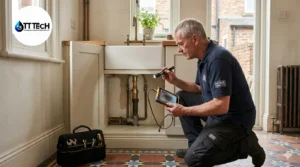
Lead pipes do not announce themselves. They are soft, slightly grey, and leave a mark when scratched with a key. A licensed plumber can identify them quickly. If your Sheffield home still has lead supply pipes, replacement should be treated as a priority, given the ongoing water contamination risk. Retrofit plumbing systems using copper or plastic pipework can often be installed without tearing up every wall and floor.
Galvanised Steel Pipes: What Happens When Iron Meets Water for Decades
Homes from the 1930s to 1960s often used galvanised steel pipes. Once the zinc coating degrades, the steel beneath rusts from the inside out. That rust builds up on the inner walls, narrowing the pipe and slowing the flow. This is why low water pressure in older Sheffield homes is so often traced to galvanised steel rather than anything to do with the mains supply.
As rust continues to build, it breaks off in flakes, producing the discoloured or brown water many older homeowners notice first thing in the morning. It signals that the pipe is deteriorating and the water quality in that section is compromised. Galvanised steel pipes also become increasingly prone to pipe leaks and bursts as the corrosion weakens the pipe wall, and joints lose their reliability. The realistic lifespan in UK conditions is around 40 to 70 years, and many Sheffield homes have pipework well past that point.
Cast Iron Drainage Pipes: Slow Failure Over Many Years
Many pre-1970s Sheffield homes have drainage systems built from cast iron. It was strong and resistant when new, but over the decades, the internal surface develops scale and corrosion. Tree root intrusion is a particular problem in older properties where mature trees have had decades to grow toward moisture, and cast iron joints are not perfectly sealed against determined root systems.
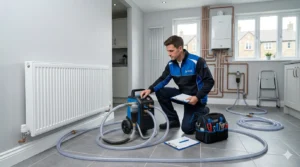
Symptoms of failing cast iron drainage tend to be gradual: slow-draining baths and sinks, gurgling sounds when water drains elsewhere, recurring blockages, or a persistent damp smell at ground level. Poor drainage systems are not just an inconvenience. They can create damp conditions in subfloors and walls, which can eventually lead to sewer line problems affecting shared infrastructure beyond your property. A CCTV drain survey is the most reliable way to assess the condition of cast iron drainage without unnecessary disruption.
Aging Pipework Corrosion: The Hidden Risk Inside Your Walls
Aging pipework corrosion in pre-1970s homes extends beyond lead and galvanised steel to joints, fittings, and connections throughout the system. Even copper pipes can corrode if the water chemistry is slightly off or if the pipes have been subject to repeated thermal stress.
Sheffield’s water supply is relatively soft, which reduces limescale but is actually more aggressive on metal pipes than hard water, because it lacks the minerals that form a protective internal coating. Pinhole leaks are a common result, going undetected behind walls for months and causing hidden damp that only surfaces when damage is already significant. Regular checks of exposed pipework under sinks, in airing cupboards, and around the boiler can catch early signs before they escalate. Greenish deposits around copper fittings and white crystalline buildup around joints are both worth investigating.
Low Water Pressure: Why It Happens in Older Sheffield Properties
The most frequent culprits behind low water pressure in pre-1970s Sheffield homes are corroded or narrowed internal pipes and outdated gravity-fed systems. Many older homes were built with a cold water storage tank in the loft, providing pressure through height alone, which produces modest pressure by modern standards. Add internal scaling and corrosion, and the pressure at the tap can fall to a level that frustrates showering and causes problems for modern appliances requiring minimum pressure to operate.
Upgrading from a gravity-fed system to a mains-pressure setup is one of the most effective improvements you can make. It typically involves removing the header tank, fitting a combination boiler or unvented cylinder, and confirming the incoming mains supply is adequate. Daily comfort improves a lot.
Inefficient Old Boilers and Outdated Heating Systems
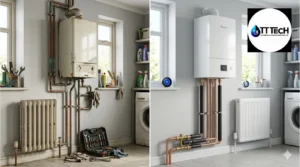
Many pre-1970s Sheffield properties have boilers that are fifteen, twenty, or thirty years old, installed before condensing boilers became standard. Inefficient old boilers cost more to run, are harder to find parts for, and can pose a safety risk if the heat exchanger is cracked or the flue is compromised. Carbon monoxide leaks from poorly maintained older boilers are a serious hazard.
These homes were also built with radiators sized for lower-temperature systems. Fitting a modern boiler without checking radiator compatibility can result in a heating system that runs constantly but never properly warms the house. A full heating system assessment alongside any boiler replacement helps ensure the upgrade actually delivers what it should.
Water Contamination Risk Beyond Lead
Lead pipes are the most discussed risk, but older homes can contain a mix of pipe materials and fittings joined over decades, some using solders and compounds that would not be permitted in modern installations. Water contamination risk is also higher where supply pipes run close to drainage, a more common layout in older construction, where the segregation of supply and waste was less rigidly managed.
If you have concerns about water quality, an accredited laboratory water test covering lead, bacteria, and nitrates costs relatively little and gives real information rather than guesswork.
Retrofit Plumbing Systems: What Updating an Older Sheffield Home Actually Involves
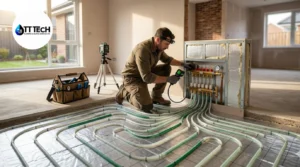
Retrofit plumbing systems can sound daunting, but the reality depends on scope and approach. In many cases, new supply pipes can be routed through less disruptive pathways using modern flexible materials that reach spaces rigid copper cannot. A realistic retrofit might include replacing lead or galvanised supply pipes, updating drainage from cast iron to PVC, upgrading to a mains-pressure system, and fitting a new boiler.
It can be done gradually. A phased approach, starting with the highest-risk elements like lead pipes and boiler safety, then working through the rest over time, is practical for both cost and disruption.
Blocked Drains and Sewer Line Problems
Older cast iron and clay drainage systems have rougher internal surfaces than modern plastic, accumulating grease and debris more readily. Socket-and-spigot joints sealed with hemp and cement crack over time, creating entry points for roots and debris. Tree root intrusion is a particular challenge in Sheffield’s older residential areas, where mature trees are common. Roots can completely block a drainage line within a few years of finding a crack.
High-pressure jetting clears existing roots, but if the pipe is cracked, roots return unless the section is repaired or replaced. Sewer line problems can also extend beyond your property boundary. Responsibility for shared private sewers was transferred to Yorkshire Water in 2011, so if problems appear to affect neighbouring properties too, contact Yorkshire Water before commissioning private repair work.
Signs Your Pre-1970s Sheffield Home Needs a Plumbing Assessment
- Water that runs brown or discoloured for more than a few seconds when first turned on
- Persistent low water pressure with no explanation of the mains supply
- Heating or hot water that takes too long to respond or never reaches the right temperature
- Damp patches appearing on walls, ceilings, or floors with no clear cause
- Consistently slow drains across multiple outlets
- A boiler over fifteen years old without recent professional servicing
- Visible corrosion on exposed pipework, especially around joints
- A persistent drain smell that does not clear after cleaning
- Rising water bills with no change in water usage
- A loft tank or cylinder showing rust or leakage
Several of these together in a pre-1970s property is a clear signal that a full plumbing assessment is overdue.
Conclusion
Older Sheffield homes are genuinely appealing, often better built and more affordable than newer developments. The plumbing challenges they present are real but manageable when identified early and addressed in a sensible order.
Lead pipes, galvanised steel, cast iron drainage, ageing pipework corrosion, inefficient old boilers, and poor drainage systems are common features of pre-1970s properties across Sheffield and the wider UK. None of them become inevitable problem if caught in time.
The key is not waiting for something to fail. A proactive plumbing assessment, including a CCTV drain survey and a check for remaining lead pipework, puts you in control rather than reacting to an emergency. If your Sheffield home was built before 1970, the plumbing deserves a proper look. Not because disaster is imminent, but because knowing where you stand is always the better position to be in.
Frequently Asked Questions
How do I know if my Sheffield home still has lead pipes?
Get a plumber to check. Lead pipes are soft, grey, and leave a shiny mark when scratched. Common in homes built before 1970.
Is low water pressure fixable without major work?
Sometimes. Small issues are easy to fix, but older systems may need a full upgrade.
What is the lifespan of plumbing in a pre-1970s home?
Around 50–70 years. Many older pipes are now worn out and prone to issues.
Can tree roots really damage drainage pipes?
Yes. Roots can get inside pipes and cause serious blockages or damage.
Is it necessary to replace all the plumbing at the same time?
No. Fix the most urgent problems first, then deal with the rest over time.