If your radiators are cold at the bottom, your boiler is making strange noises, or your heating does not warm the house like it once did, sludge has likely built up inside your central heating system. Power flushing is the recommended fix. This guide covers what it involves, what it costs in Sheffield in 2026, which boilers need it most, what to look for in a local engineer, and whether it is worth the money.
Power Flushing: What It Is and Why It’s Needed
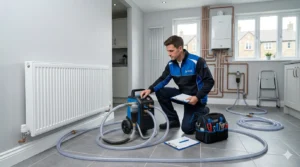
Power flushing is a cleaning process for your central heating system. A qualified engineer uses a specialist machine to circulate high-velocity, low-pressure water mixed with chemicals through your pipes, radiators, and heat exchanger. This removes sludge, rust, limescale, and debris that build up over time.
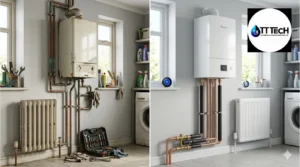
The dark sludge you see when bleeding a radiator is iron oxide caused by corrosion. It settles in radiators, blocks pipes, and coats the heat exchanger, restricting water flow and making your boiler work harder, which can lead to breakdowns.
Sheffield’s water, supplied by Yorkshire Water, is moderately hard, so limescale is also a concern, especially in areas like Hillsborough, Dore, and Crosspool. This makes power flushing important for many South Yorkshire homes.
A power flush is not a DIY job. It requires proper equipment and chemicals and should be carried out by a Gas Safe registered engineer, often following standards set by organisations like HHIC and the Benchmark scheme.
Signs Your Sheffield Home Needs a Power Flush
Cold Zones on Radiators, Especially Lower Sections: Warm at the top, cold lower down means sludge is blocking hot water circulation. Bleeding only releases trapped air, not sludge.
Discoloured water when you bleed radiators: Dark, rust-coloured water from a bleed valve is direct visual confirmation that iron oxide and corrosion are present.
Boiler cutting out repeatedly: Modern condensing boilers from Worcester Bosch, Vaillant, and Baxi shut down when sludge restricts heat exchanger flow. Regular lockouts without a clear mechanical fault point strongly point to sludge.
Noisy boiler or pipework: Banging, gurgling, or kettling points to limescale on the heat exchanger or magnetite sludge, causing flow problems. Worcester Bosch and Ideal boilers commonly exhibit kettling when sludge is present.
Central Heating Taking Longer to Warm Up: If whole-house heating takes noticeably longer than before, especially on cold Sheffield mornings, reduced circulation is the likely cause.
Radiators that never get properly hot: If your Honeywell or Drayton programmable thermostat is at its highest setting and radiators are still barely warm, sludge restriction is the likely culprit.
Frequent pump failures: Circulator pumps from Grundfos or Wilo get damaged trying to move thick, sludge-laden water. Replacing a pump more than once in a few years is a clear sign your system needs a flush.
Power Flush Cost Sheffield 2026: What to Expect
In Sheffield in 2026, expect to pay roughly the following, depending on system size:
Small system (up to 6 radiators): £300 to £450 including chemicals and inhibitor recharge.
Medium system (7 to 12 radiators): £400 to £600, depending on sludge levels and additional work required.
Large system (13 or more radiators): £550 upwards, with heavily contaminated systems sometimes reaching £700 to £800.
These prices reflect typical rates across Sheffield, Rotherham, Barnsley, and Doncaster in early 2026. Very cheap quotes may cut corners on time or chemicals, leaving your system worse.
A proper service includes a cleaner (like Fernox F3), the flush using professional machines (Kamco or Magnacleanse), and a corrosion inhibitor (Fernox F1). Many engineers also add a magnetic filter (Magnaclean or Fernox TF1).
Quotes that skip the inhibitor or filter are a warning. Some companies combine the flush with a boiler service to save money if your boiler is due.
Central Heating Flush Sheffield: The Process Explained
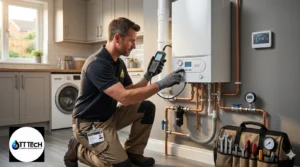
The process usually takes four to eight hours, depending on system size and contamination. The engineer first inspects the system, checking radiators, the boiler, and the pump. Older systems may need prep work before flushing.
A chemical descaler like Fernox DS3 or Sentinel X800 is added to loosen deposits. The flushing machine pumps water through the system, reversing flow through radiators until it runs clear.
Once clean, the system is refilled with fresh water and corrosion inhibitors. pH is checked to ensure proper levels, and many engineers fit a magnetic filter, such as Magnaclean Professional 2 or Fernox TF1 Omega. Finally, a full check is done: bleeding radiators, checking boiler pressure, and confirming that all TRVs from Drayton, Danfoss, or Honeywell work correctly.
Sludge in Radiators Sheffield: Why It Builds Up Faster in Some Homes
System age: Sheffield has a large stock of Victorian and Edwardian terraced housing across areas like Burngreave, Walkley, and Sharrow. Cast iron radiators and older mild steel pipes corrode more readily than modern equivalents, and decades of buildup can be substantial.
Lack of inhibitor: Many systems across Sheffield were installed or serviced without a corrosion inhibitor. Without it, iron oxide production accelerates. This is one of the most common and entirely preventable causes of premature sludge.
Incompatible metals: When different metals are used in the same system, galvanic corrosion occurs. Aluminium radiators connected to copper pipework are a common example. Brands like Stelrad and Quinn make both steel and aluminium radiators, and the choice has more impact than most homeowners realise.
Frequent system top-ups: A system that regularly loses pressure keeps introducing fresh oxygenated water. Oxygen drives iron corrosion, so a constantly refilled system produces sludge significantly faster than one holding steady pressure.
No magnetic filter: Without a Magnaclean or Bosch EasyFilter, magnetite particles travel continuously around the system, accelerating corrosion wherever they contact metal surfaces.
Which Boilers and Systems Benefit Most
Worcester Bosch boilers, particularly the Greenstar 4000, 8000, and CDi series, have tight heat exchanger tolerances. Worcester Bosch states in their installation documentation that power flushing is recommended before fitting a new boiler, and failing to do so can void the warranty.
Vaillant ecoTEC boilers are widely installed across Sheffield. The ecoTEC Plus and ecoTEC Pro can display fault codes F22 and F75 when poor water quality restricts flow or interferes with pressure sensors.
Baxi boilers, including the Platinum and 800 ranges, are among the most common in Sheffield’s housing stock. Baxi’s warranty documentation references system contamination as a reason for voiding cover.
Ideal Logic and Ideal Vogue boilers are well represented in South Yorkshire. Ideal’s guidance states that a dirty system can cause premature component failure regardless of boiler quality.
Combi boilers are generally more vulnerable to sludge damage because the heat exchanger is smaller and more compact. The secondary heat exchanger is particularly prone to blocking with limescale and magnetite, especially in Sheffield’s smaller terraced properties.
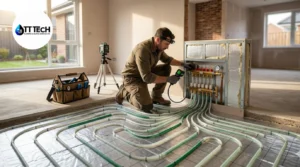
Underfloor heating systems suffer disproportionately because pipes are narrow and flow rates are lower. Brands like Myson and Polypipe, commonly used in Sheffield developments from the 2000s onwards, have specific water quality guidance that includes inhibitor treatment and power flushing.
Finding a Reputable Power Flushing Company in Sheffield
Gas Safe registration is the minimum requirement: Any engineer working on a gas boiler must be Gas Safe registered. Verify registration at the Gas Safe Register website. If a company cannot provide a Gas Safe number, walk away.
HHIC membership and Benchmark certification are good additional indicators of professionalism and adherence to industry best practice.
Ask about the equipment they use: Kamco is the leading UK brand for power flushing machines, with their FlowDynamics or ClearFlow models as the industry standard. Adey’s Magnacleanse system is another respected option. An engineer who can name their equipment is usually one worth trusting.
Request a written quote that itemises everything, including machine type, chemicals, inhibitor, and whether a magnetic filter is included or quoted separately. Vague one-line quotes are a warning sign.
Check online reviews: on Sheffield-based platforms and Google Business listings, specifically for reviews mentioning power flushing and whether the engineer checked inhibitor levels at the end.
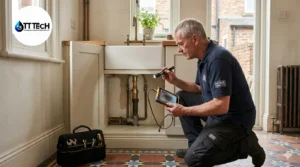
Ask if they will carry out a system assessment first: A good engineer will inspect your system before quoting, since the condition of radiators, valves, pump, and pipework all affect how the flush should be approached.
What to Do After a Power Flush
Annual boiler servicing is essential: Worcester Bosch, Vaillant, and Baxi all require annual servicing to maintain warranty cover. During a service, the engineer will check the system water quality and top up the inhibitor if needed. Many Sheffield Gas Safe engineers offer service contracts that include this.
Clean and check the magnetic filter regularly: A Magnaclean, Fernox TF1, or similar filter should be cleaned at least annually alongside the boiler service. A filter that is never cleaned gradually loses effectiveness and can restrict flow.
Monitor system pressure: Your boiler’s pressure gauge should read between 1 and 1.5 bar when cold. Regularly topping it up indicates a leak that also affects water quality.
Bleed radiators after the flush: Some air may enter during the process. Bleeding radiators in the weeks following the flush ensures full circulation and maximum heat output from each radiator.
Consider a system water test: Products like Sentinel X100 Check or Fernox Protector + Filter Fluid include testing kits to check inhibitor concentration and pH. Keeping pH between 6.5 and 8.5 gives you confidence between annual services.
Is Power Flushing Worth It for Sheffield Homeowners in 2026
If your system is showing clear signs of sludge contamination, a power flush is almost certainly cheaper than the repairs you will otherwise face. Heat exchangers in Worcester Bosch, Vaillant, and Baxi boilers can cost several hundred pounds to replace. Circulator pumps, diverter valves, and printed circuit boards are all components that sludge damage can destroy. A power flush costing £400 to £500 is good value if it extends the life of a boiler that would otherwise need a £1,000 repair or £2,500 replacement.
If you are having a new boiler installed, a power flush beforehand is close to essential. Installing a new Worcester Bosch Greenstar or Vaillant ecoTEC into a dirty system means the new heat exchanger picks up contamination from day one, efficiency gains are reduced, and the warranty may be invalidated.
If your system is under five or six years old, has always had inhibitor added, and has a magnetic filter in place, a chemical flush using Fernox F3 or Sentinel X400 may be sufficient without the full power flushing process.
For older Sheffield homes, properties with an unknown service history, or any system showing the signs above, power flushing in 2026 represents genuinely good value. A heating system working at reduced efficiency because of sludge is costing you money every single day.
Conclusion
Power flushing is one of those services that often gets put off because the upfront cost feels significant. But for most Sheffield homeowners dealing with an underperforming heating system, it is one of the more cost-effective decisions you can make in 2026.
The key is doing it properly. That means choosing a Gas Safe registered engineer, insisting on professional-grade equipment like Kamco flushing machines or Adey Magnacleanse systems, using quality chemicals from brands like Fernox or Sentinel, and ensuring the system is protected with a corrosion inhibitor and magnetic filter after the work is done.
Whether your home is a terraced house in Hillsborough, a semi in Dore, a modern apartment near Sheffield city centre, or a larger property in Fulwood, the principles are the same. Clean water circulates efficiently; dirty water does not. A well-maintained central heating system lasts longer, runs cheaper, and causes fewer problems.
If you are unsure whether your system needs a power flush, the best starting point is a professional assessment from a Gas Safe-registered company in Sheffield. Most will visit and give you an honest appraisal without charging for the initial inspection.
Frequently Asked Questions
1. How long does a power flush take in Sheffield?
Most residential power flushes take 4,8 hours. Small systems may finish in 4,5 hours, while larger or heavily contaminated systems can take a full day. Quotes of 1,2 hours are not enough for a proper flush.
2. Will power flushing damage my old radiators or pipes?
Power flushing uses high-velocity, low-pressure water, so damage is rare. Very old or corroded components may be at risk, and a professional engineer should check first. Chemical flushes can be gentler for fragile systems.
3. How often should I power flush my central heating system?
Every 5–6 years for a system with an inhibitor and a magnetic filter. Systems without these, or properties with unknown service history, may need it sooner. Annual boiler services help track system cleanliness.
4. Can I just add a chemical cleaner instead of having a power flush?
Chemical cleaners work for lightly contaminated systems. For heavy sludge or limescale, a full power flush is needed to remove debris. An engineer will advise the best approach.
5. Does a new boiler installation always need a power flush?
Not always, but it’s highly recommended. Most major brands require a clean system for warranty coverage. Even if the system looks clean, flushing protects the new boiler from sludge and debris.